

Incontinence in senior dogs is common; however, it is often misunderstood. This condition can affect both a pet's quality of life and an owner's daily routine.
As dogs age, changes in their bodies can occur, leading to a loss of bladder control and unexpected accidents.
This condition can be frustrating to deal with. However, it is important to know that incontinence is usually a symptom of an underlying issue rather than simply a behavioral problem.

Underlying issues can range from age-related muscle weakness to hormonal imbalances or more serious health concerns.
Finding and understanding the root cause is the first step toward finding effective solutions.
In this article, we will explore the common causes of incontinence in older dogs.
We will also discuss practical strategies to help manage the condition with compassion and care.
Causes of incontinence in a senior dog
While incontinence can affect dogs of any breed or gender, middle-aged or senior females tend to be affected most often.
Some breeds also seem to be predisposed to the issue, including Doberman pinschers, Old English sheepdogs, and cocker spaniels.
In any dog, incontinence can be caused by several different issues.
Bladder Muscle Weakness
When most dogs are young, their bladder muscles are appropriately strong.
These muscles are what work to keep the bladder sealed off until the dog is ready to go.
As a dog ages, these muscles get weakened, usually due to reduced hormone production.
Spayed and neutered dogs naturally have fewer hormones in their system. These dogs may show signs of old-age incontinence earlier than intact dogs.
Injury or Illness
Illnesses and injuries can also cause incontinence in senior dogs.
The problem may be as simple as a spinal injury or bladder stones. Or, as complex as kidney failure, a protruding disc, or the presence of a tumor.

Solutions for incontinence
Just as there are several possible causes behind incontinence in senior dogs, there are also several possible solutions!
Medication
If the vet determines your dog's incontinence to be caused by hormonal issues, they may start them on hormonal replacement therapy. This is usually in the form of oral medication.
If they believe the issue can be solved without hormones, vets may prescribe the non-hormonal medicine phenylpropanolamine (Proin). This is what my dog Sallie took, and currently, my other dog Brandi takes it.
In both cases, doses of the medication will need to be continued throughout the rest of your dog's life to maintain effectiveness.
Surgery
Another way to fix incontinence is with surgery.
This is usually reserved for cases where there is an obstruction or injury that cannot be cured with medication.
In these cases, the problem may be completely fixed. On the other hand, your dog may still have an occasional accident, but not as frequently as before.

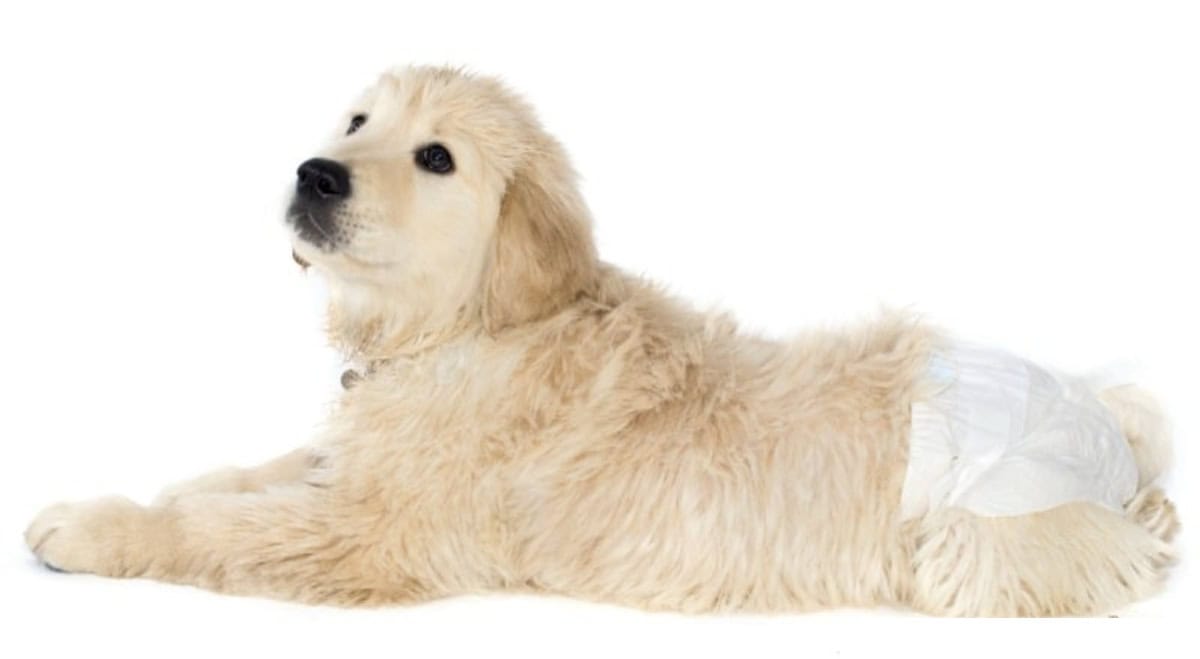
Diapers
If medication or surgery doesn't solve your dog's incontinence completely, you may have to keep them in dog diapers.
While this isn't ideal, it is a decent solution.
After a little while, your dog probably won't even remember that they're wearing a diaper! And you'll be happy not having to worry about them having accidents in the house.
Pee Pads
Another solution is using pee pads. Place them in their crate if they are leaky during the night.
You can also place them in an area that they can easily reach rather than waiting to be let out.

Final thoughts
To figure out the cause and best solution to your senior dog's incontinence, consult your vet.
They can figure out exactly what is causing your pet's incontinence, and tell you the best way to deal with it!
Whatever the bottom line is, know that your senior pet cannot help it.
Do not punish or scold your pet! They are not doing it on purpose, and it is something out of their control.
Be understanding and patient in helping them find a solution or dealing with it.
Have you ever dealt with incontinence in a senior dog before?
Cathy Armato says
This is such a helpful post, thank you!! I'm not dealing with this issue with my dogs now, but I appreciate all the information for future reference.
Love & Biscuits,
Dogs Luv Us and We Luv Them
Bethany Cook says
Great info, thank you
Tenacious Little Terrier says
I haven't had a senior dog yet but I'm prepared to use belly bands if it comes up.
Denise Gruzensky says
My Dog brother has used a belly band after being diagnosed with Diabetes cause he leaked... ~Shasta
Carol Bryant says
My last Cocker had elderly incontinence and we used a doggie diaper. She was okay with it and it was even fashionable. Great piece.
Sandy Weinstein says
i have this problem now sometimes. if i dont catch her at the right moment, she cant hold it very well. she is deaf, almost 15, but she tries to go to the door, she just circles a lot.
Sweet Purrfections says
Not dealing with it with my pets, but dealing with it as a senior human. Thanks for the information.
Linda Szymoniak says
My senior Coonhound girl, Suki, started having issues last year. I worried that it was a sign of her kidneys starting to fail, and after taking her to the vet, we found while she was showing the early signs of kidney issues, what the main culprit was, was actually a UTI, which was cleared up quickly with an antibiotic. She's done much better since then . although it's likely only a matter of time at this point.
Talent Hounds says
I wish I had got diapers for Cookie in her last month. I just did not know as much back then. Thanks for sharing as it will help people deal effectively and kindly with issues.
Ava at Savvy Pet Care says
I'm glad I never had to deal with this with my dogs. So happy for Sallie that the medication helps her.
MattieDog says
We've adopted a number of seniors and we agree - diapers, you can even get em so that they look like skirts or shorts and so your senior pet can rock some fashion!!
Beth says
I am glad there are options for this problem. I had a Yorkie that lived to 17 and she had occasional accidents, but not very many.
Sarcastic Dog says
My Zora will turn 13 at the end of this month and so far I am not seeing any signs of incontinence. I have noticed that over the last six or seven months, it seems to take her a little longer to get to peeing when we are outside. Not sure if this is common in older dogs or if she is just wanting to prolong our walks 😉
Molly says
Yay on 13 years young!!! I think sometimes that can happen also - the taking longer to start peeing - when they get older.
Amanda Saltsman says
I had a dog for 22 years it broke me to lose my Emma girl
Michelle & The Paw Pack says
Love senior dogs so much! How cute do they look in the doggy diapers!? I'm glad there are options out there for dealing with incontinence in senior pets.