

Many people have not heard of the breed of dog called Papillon. So, today, let's check out a few fun and interesting facts about the Papillon dog breed.
To start, these beautiful little dogs get their name, Papillon, from the French word for butterfly.

Jump to:
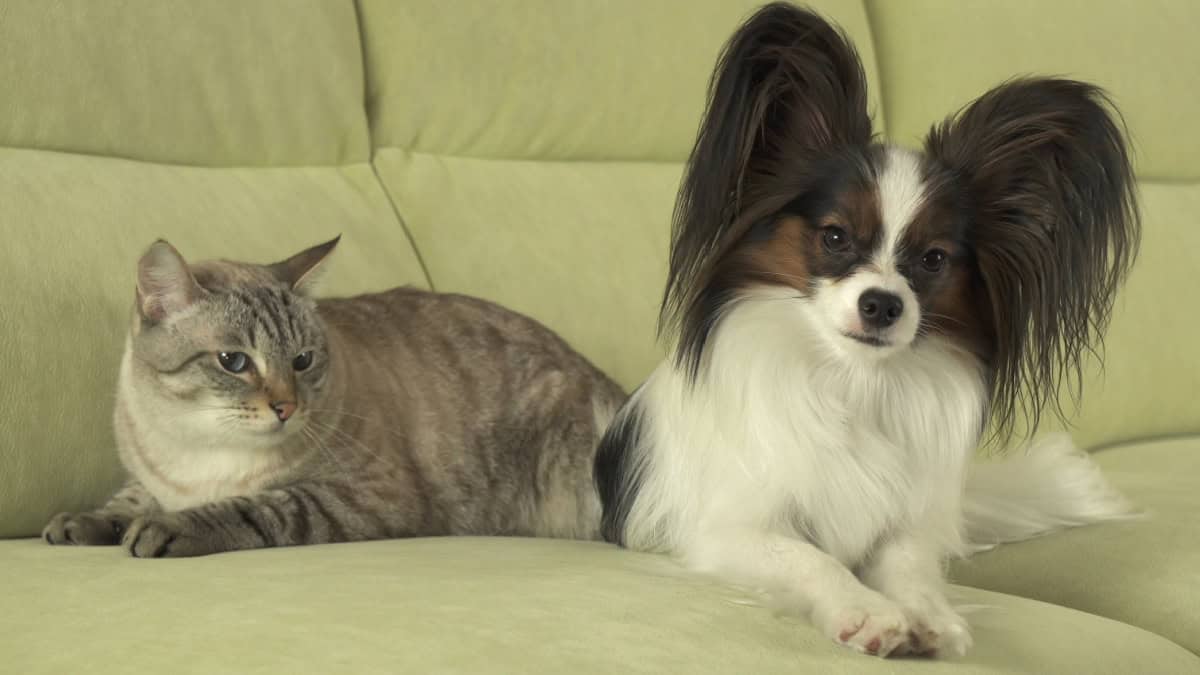
The name is inherited from the breed's unique ears. When standing alert, their ears resemble butterfly wings.
Their head usually has a white stripe down the snout.
Their tails fan out, their fur flowing, adding to their graceful appearance.
Papillon Size
They are a smaller breed of dog and considered a toy breed. However, don't let their size fool you! They have big personalities!
They range slightly in size:
- Height: 8 to 11 inches from the withers (the spot between the shoulder blades) to the point where the tail starts.
- Weight: Range of 7 to 10 pounds. The females are usually slightly smaller than the males.
It is important to keep your Papillon at a healthy weight. Overweight dogs are more likely to suffer from joint issues and may have a shorter lifespan.
A well-cared-for and healthy Papillon can live a happy life up to 13 to 16 years.
Activity Level of the Papillon
Even though they are small, they are very energetic and active. You may have seen them in:
- Sports competitions
- Obstacle courses
- Dog shows
They are very naturally agile dogs, which makes them good for obstacle courses.
They are also great to watch running because of the way their fur blows beautifully in the wind.
These little dogs love long walks, interactive play, and puzzle toys. To keep them happy, they need daily exercise and mental activity.
Grooming Needs
Grooming a Papillon is important.
- Weekly brushing: They need to be brushed once a week at a bare minimum. They have long fur, and it tends to get bunched together if not brushed on a weekly schedule.
- Monthly grooming: Having them professionally groomed once a month helps their coat stay beautiful.
- Ears: Regular ear cleaning is a must to help prevent infections.
- Dental care is also essential, as with all small breeds, Papillons are prone to dental issues.
Papillon Health Considerations
Papillons are usually very healthy, but are prone to certain genetic health issues, such as:
- Luxating patella: This is when the knees pop in and out of place. The most common health issue they might suffer.
- Von Willebrand's disease: a blood-clotting disorder.
- Mitral valve disease: a heart condition.
- Progressive retinal atrophy: This will affect eyesight over time.
Luxating patella can be fixed by surgery, which is costly and requires a long bed rest.
However, a luxating patella can sometimes improve with rest, keeping them from jumping on furniture and walking on slippery floors. Doing these simple things can sometimes give the patellas time to heal on their own.
Papillons As Companions
Papillons are great companion dogs. They are loving, loyal, and affectionate. They stick by their masters' sides and are there for their masters no matter what.
These small dogs are also very intelligent and quick learners.
Papillons are a great breed to get if you have cats. They usually get along wonderfully.
They are protective. Even at their size, they also try to protect the house.
Some barking training might be necessary for them. They tend to alert you to every sound they hear.
Papillon Mixes
Recently, they have started mixing the Papillon breed with other breeds to create some adorable designer hybrids.
A couple of the new breeds are:
- Papi-chons (Papillon and Bichon) - these are fluffy, playful, and great with families.
- Papi-poos (Papillon and Poodle) - Low-shedding, intelligent, and energetic.
More often than not, these mixes inherit the intelligence and energy of the Papillon, along with the coat type and temperament of the other breed paired with.
Final Thoughts
If you are in the market for a great smart small breed of dog that loves to be active yet also loves to cuddle, a Papillon is a great breed to check into.
With their butterfly-like ears, bright personalities, and loyal hearts, they make wonderful companions for families and/or individuals.

rochelle haynes says
Very cute dog
Terri Quick says
Aww so adorable
Elizabeth says
I wonder why smaller breeds have more dental problems…
Heather says
I am not familiar with this dog breed but they sure are cute.
Nancy says
What an interesting article. I love leaning about different breeds of dogs.
Barrie says
Such a cute little dog! Too long hair for my allergies, though