
Does your pet have bad breath? Keeping your dog or cat's teeth healthy is important. Dogs and cats can suffer from dental disease, which can lead to other health problems, making pet dental care a high priority.
Tooth decay can be common in dogs and cats, as tartar can build up if not removed by chewing on raw bones or chew toys, or if fed a poor diet.
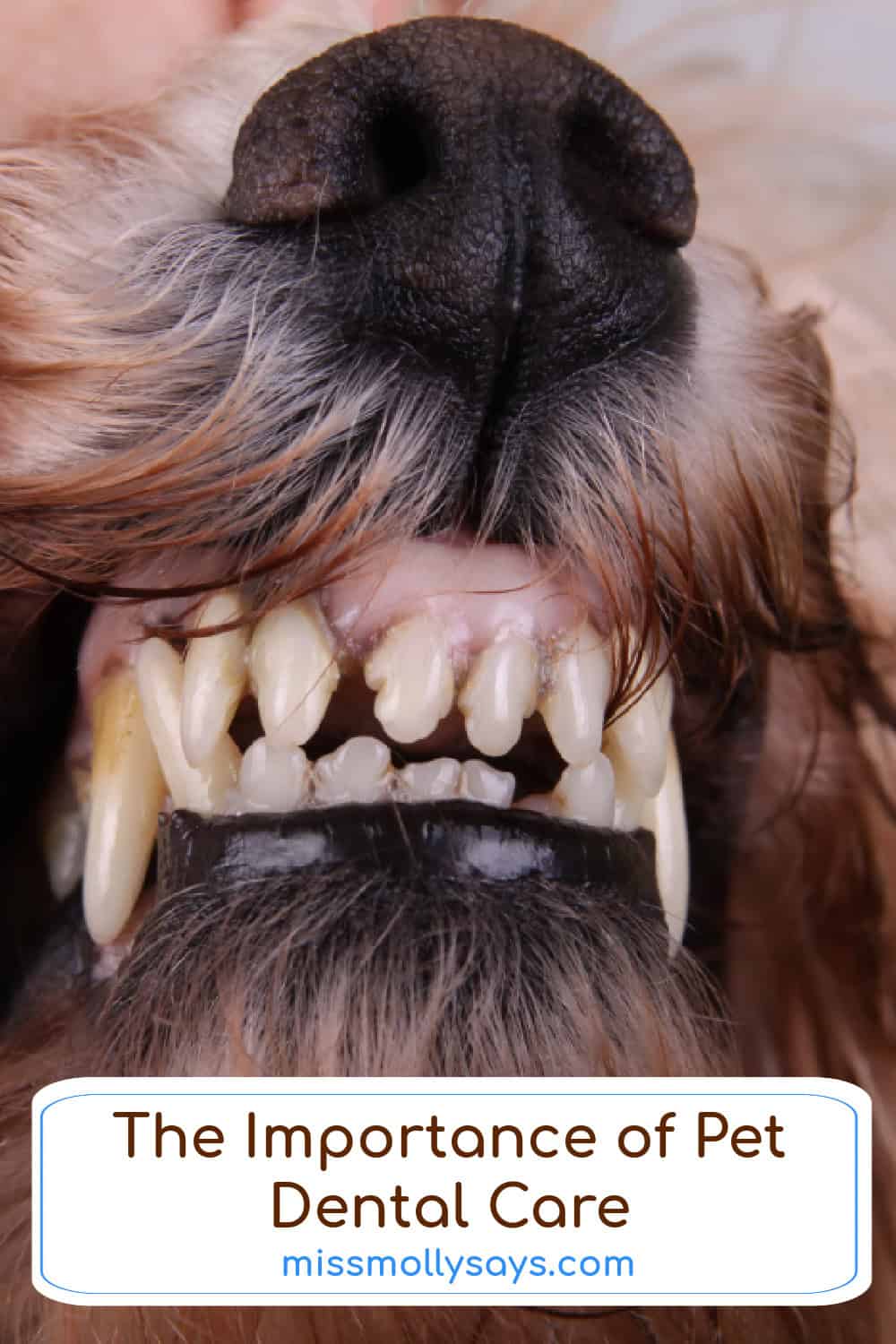
Monitoring your pet's teeth and mouth is crucial, as a neglected mouth can become a hotbed of pus and bacteria, cause bad dog breath, and make for a miserable pet.
If your pet develops dental disease, bacteria can result, causing pain and discomfort.
In serious cases, pus pockets can form along the gums, which creates a gap between the gum and teeth. This means more food can become lodged there, exacerbating the problem.
Gingivitis can also occur, which is red and inflamed gums. This causes your pet pain, which could lead them to not eat, or not eat properly.
This can lead to tooth loss, and if severe, bacteria can be absorbed by the body, causing liver, lung, heart, or kidney disease.
Dental disease in dogs can be easily overlooked as the cause of a dog losing weight or not feeling well.
Teeth and gums are part of your dog's checkup, whether at home or a veterinarian's office. It is imperative to keep your dog in good health.
Sometimes it is not difficult to tell if your dog has dental disease, especially if it has been overlooked for a very long time.
Tartar Buildup
The most obvious problem of dental disease will come with the buildup of tartar on the teeth.
This can be seen by the naked eye as the tooth will have a yellow cast of color, and as it worsens, this yellow cast will turn towards a brown color.
Tartar will lead to other dental problems if it is left untreated, such as gingivitis - inflammation in the gums.
The buildup of tartar can cause the tooth to become level with the gum, where there should be an indentation.
Signs Of Dental Disease
There are a few signs of dental disease in your dog that can be detected early if you are vigilant.
One of the more prominent indications is the smell of your dog's breath, which will smell very foul.
Your dog may prefer to eat softer foods or chew on one side of his mouth all the time.
They may not chew on a bone treat that they enjoyed before the dental problem started.
There may be symptoms of vomiting, which will hold food that has not been chewed well enough to digest.
If the dental disease is bad enough, he may paw at his face or drool.
Any of these signs should be taken seriously. You should take your dog to a veterinarian for a dental checkup.
Gingivitis
The most common cause of gingivitis is a buildup of plaque along the gum line.
In dogs, as in humans, the gum line recedes with time, but in dogs, there is a bigger chance of the root of the tooth being exposed. This is because the gum line is not as deep as it is in humans.
Dogs do not have to lose very much gum for plaque and tartar to build up, causing gingivitis.
This part of the tooth that is exposed is rougher than the tooth itself, and therefore, plaque and tartar will build up on it faster.
If your dog has gingivitis, it can be treated to eliminate any inflammation in the tooth and gum. Unfortunately, once the gum recedes, it will stay that way.
Dental disease in dogs is best treated as early as possible to ensure there is not too much damage done to the surrounding gum and tooth.
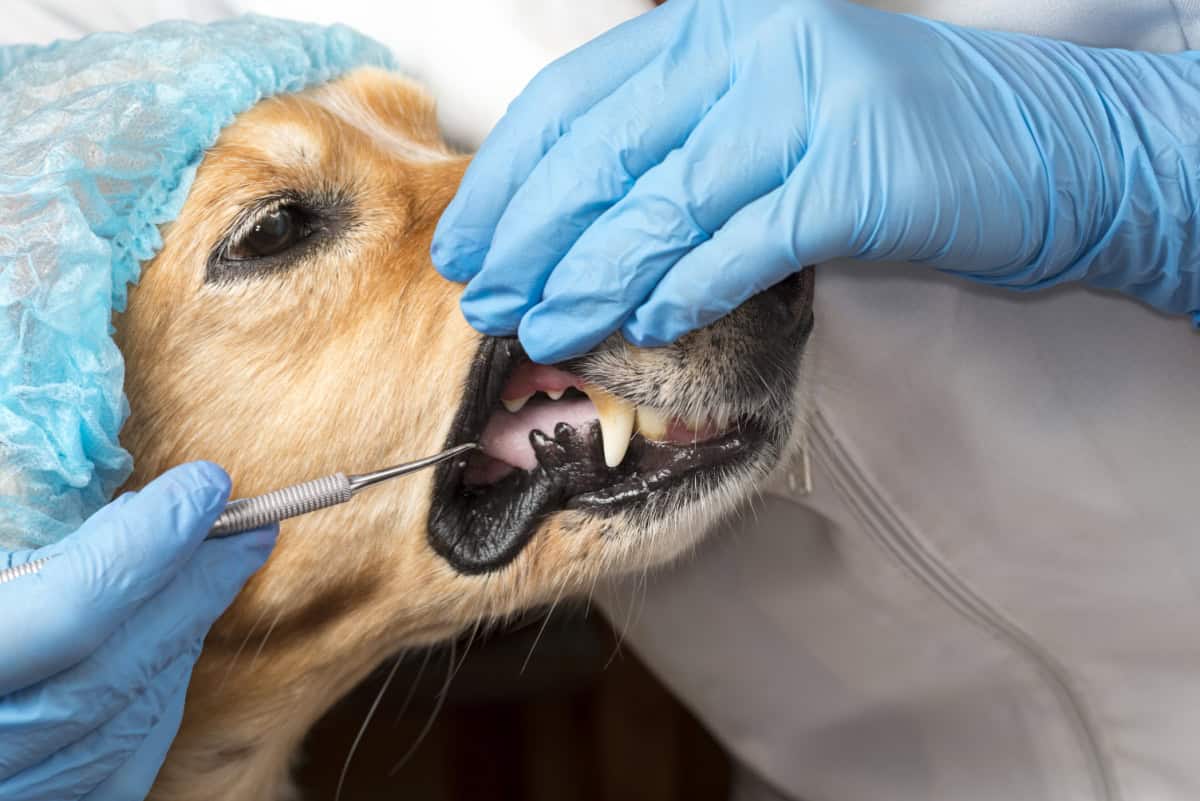
Your veterinarian will help determine just how much damage is done with dental x-rays and a good examination.
Larger type dogs should have a dental check-up at least once a year, while smaller breeds should have a dental check-up twice a year.
By doing this, you are helping to prevent any dental disease in your dog, which will keep him healthy and happy and he can still be able to enjoy that bone treat that he loves so much.
What Should I Do if I Suspect My Dog or Cat has Dental Disease?
You should consult your veterinarian and make an appointment for a check-up.
If there is sufficient tartar/plaque on the teeth, your pet may need to have dental surgery.
Dental surgery involves scaling the teeth with an ultrasonic scaler and polishing the teeth at the end to prevent further tartar/plaque from forming.
Your vet may need to remove some of the teeth.
Dental surgery is performed under a general anaesthetic.
If you're concerned about your pet, pre-anaesthetic blood profiles (blood test) can be taken so the staff is aware of any problems and can provide appropriate sedatives, anaesthetics, and any other precautions (eg, a drip).
What Can I Do to Prevent My Dog or Cat from Getting Dental Disease?
- Feed raw bones (dogs should never be fed cooked bones. If dogs swallow cooked bones, they can cause vomiting or diarrhea, or the bones may splinter and puncture the gut, or a swallowed bone can cause a bowel obstruction.
- Cats can be fed chicken necks.
- Feed dogs rawhide chews, pigs' ears, or other dental treats.
- Give your dog chew toys. Specific dental chew toys are also available.
- Feed your pets a premium diet of predominantly dry food.
- There are some specifically designed pet foods to assist with tartar removal. These are often prescription diets, so ask your vet for information.
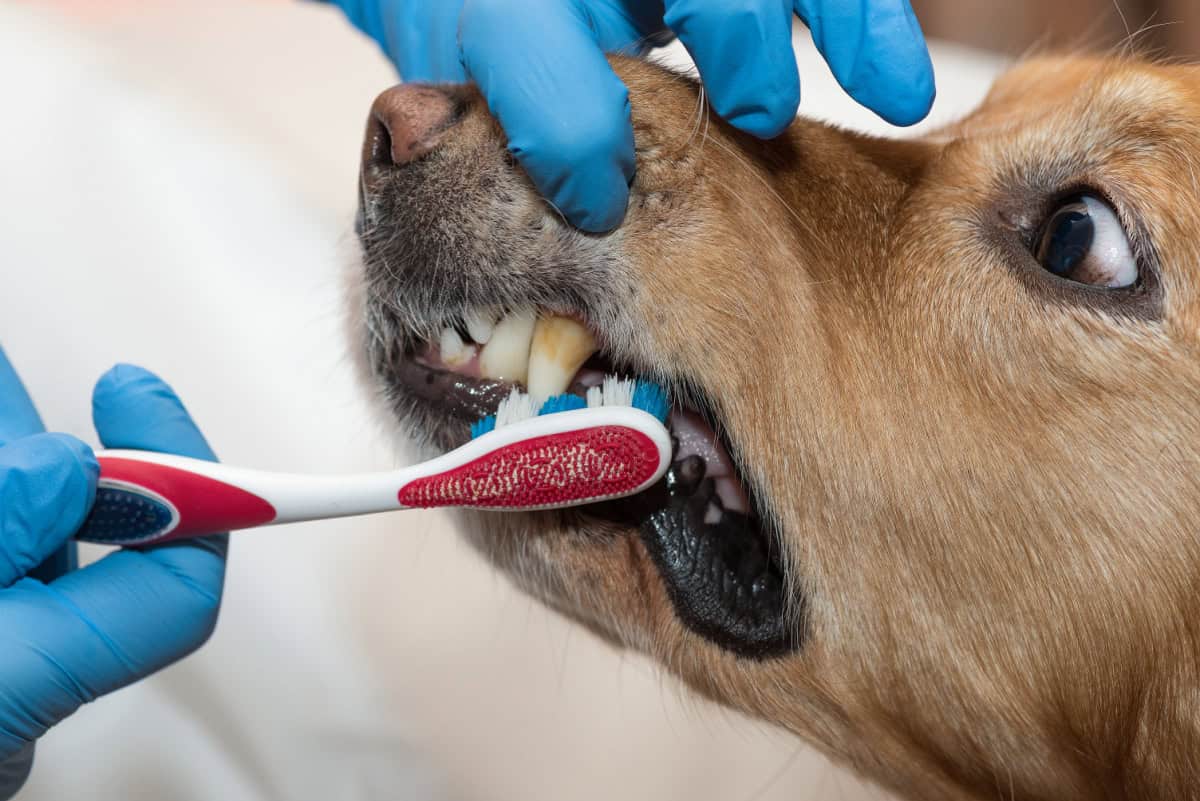
- Brushing your pet's teeth. A tricky one if your pet isn't accustomed to this. There are finger brushes and meaty-tasting pet toothpaste available, or you could use your finger to smear pet toothpaste on the teeth.
- Annual check-ups. When your pet goes for their annual vaccinations, make sure your vet checks out his or her mouth. Early detection could mean avoiding a much more serious problem later.
Remember, your pet's health is your responsibility.
Make sure to feed a good quality diet from a young age and provide raw bones and chews regularly (at least twice a week).



heather says
Pet dental care is so important. We keep up on cleanings.
Terri Quick says
I always check my dogs teeth & gums
scottydee says
I see there a finger brush for the more docile pups
Susan Atkins says
I always have my vet check my pets teeth -I find it really keeps my pets healthier !
Barrie says
Our 14 year old dog has had his teeth cleaned twice in the past 10 years. He probably needs it again.
Renee T says
Great tips. Thanks for sharing.